The Genesis of Cosmic Education
Imagine the moment when a child's mind shifts from absorbing the world unconsciously to questioning it with fierce curiosity. Between the ages of six and twelve, something remarkable happens: the child develops what Montessori called the "Reasoning Mind"—a powerful capacity for asking "how" and "why" about everything in existence. This is not merely a continuation of early childhood; it is a seismic transformation in the psychological landscape of the developing human being.
To meet the expansive needs of this developmental stage, Maria Montessori proposed something radical: a complete restructuring of education that she called Cosmic Education. Unlike traditional models that fragment knowledge into isolated silos—geography here, history there, biology somewhere else—Cosmic Education offers a unified, holistic vision of the universe. It declares boldly that all things, animate and inanimate, are interconnected and interdependent.
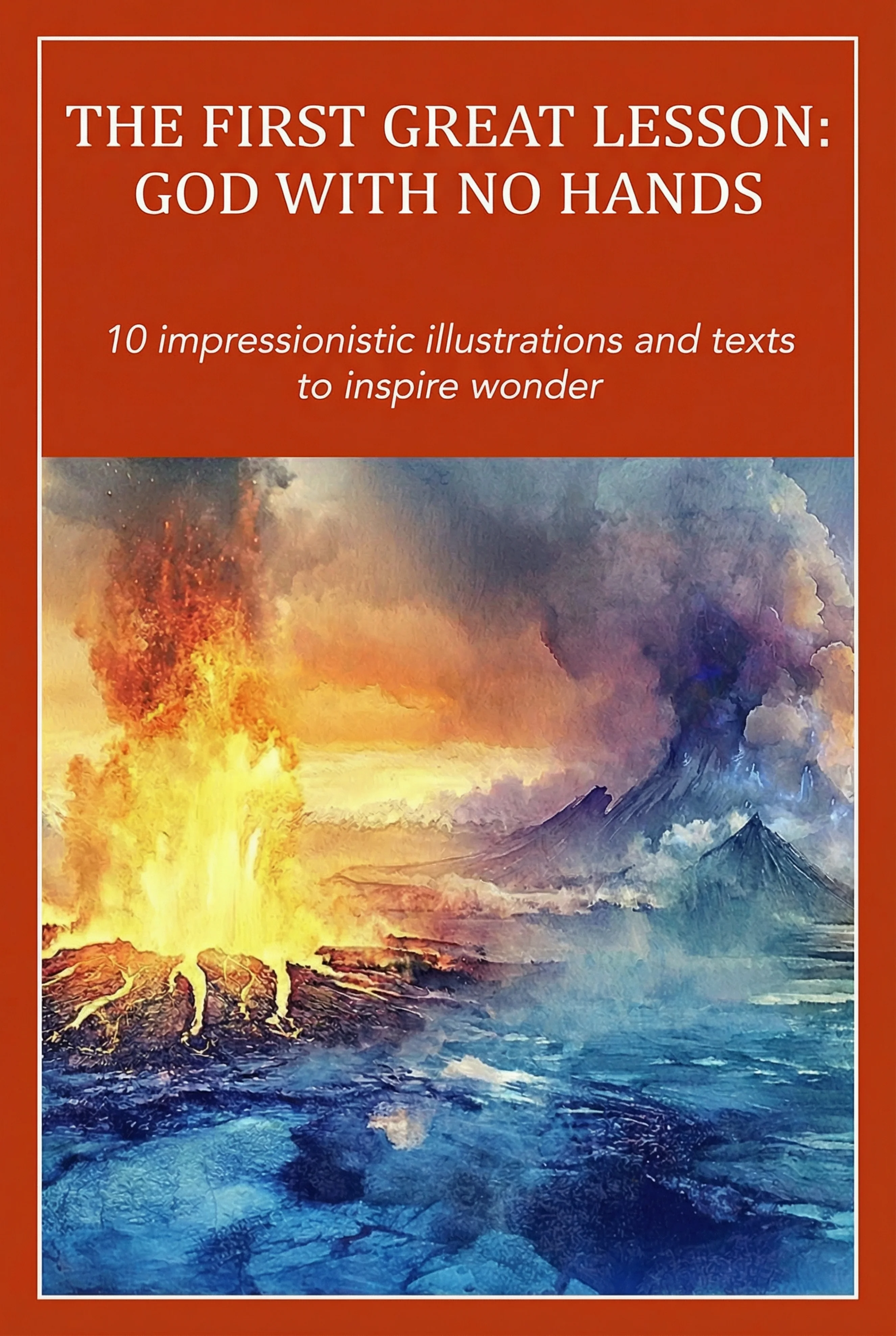
The Heart of the Matter: The pedagogical vehicle for delivering this grand vision is a series of five "Great Lessons," the first of which is "The Story of the Universe," historically known as "God With No Hands." This single, foundational story opens the door to understanding everything that follows—from the birth of stars to the invention of writing.
The Psychological Necessity of the "Whole"
The elementary child possesses a unique cognitive capacity: the ability to imagine that which cannot be perceived by the senses. Montessori understood that "imagination is the great power of this age." While younger children focus on "what is," the elementary child asks "how did it come to be?" To answer this question, one cannot simply present isolated facts. Facts, devoid of context, fail to spark the "flaming imagination" necessary for deep learning.
Montessori's solution was elegant: present the "whole" before the "parts." By introducing children to the creation of the universe, the formation of Earth, and the laws governing matter, the educator provides what she called a "mental coat rack" upon which all subsequent details can be hung.
"If the idea of the universe is presented to the child in the right way, it will do more for him than just arouse his interest, for it will create in him admiration and wonder... The child's mind then will no longer wander, but becomes fixed and can work."
— Maria Montessori, To Educate the Human Potential
This approach reverses the standard inductive method of education. Instead of starting with the local—the classroom, the neighborhood—and moving outward, Cosmic Education starts with the universal—the cosmos itself—and moves inward. This satisfies the child's deep desire to know where they fit within the grand scheme of things, offering a profound sense of orientation and belonging.
From Absorbent to Reasoning Mind
The transition from the first plane of development (birth to age six) to the second plane (ages six to twelve) represents a fundamental shift. The first plane is dominated by the "Absorbent Mind"—a mechanism for unconscious assimilation of the immediate environment. But the second plane is driven by the conscious "Reasoning Mind" and a hunger to understand the underlying patterns of existence.
First Plane (0-6 years)
The Absorbent Mind unconsciously takes in everything from the environment. The child asks "What is this?" and learns through direct sensory experience.
Second Plane (6-12 years)
The Reasoning Mind actively questions everything. The child asks "How?" and "Why?" seeking to understand causes, connections, and the invisible forces shaping reality.
The Moral Sense
A burgeoning moral consciousness emerges, with the child seeking to understand right and wrong, justice and fairness—extending naturally to their place in the cosmic order.
Montessori observed that elementary children are not only intellectually curious but also socially oriented. They understand the world through relationships—between people, between elements, between ideas. By describing the universe as an interconnected web of relationships, Cosmic Education speaks directly to this developmental need.
Historical Origins: The Kodaikanal Story
The development of Cosmic Education and the First Great Lesson is inextricably linked to one of the most dramatic chapters in Maria Montessori's life. During World War II, Maria and her son Mario found themselves interned in Kodaikanal, India, as enemy aliens—their Italian citizenship making them unwelcome in British-controlled territory. What could have been a period of despair became, instead, a crucible of creativity.
Isolated from their European training centers and stripped of their standard materials, the Montessoris turned their attention to the children of the hill station and the extraordinary natural world surrounding them. In the lush Palani Hills, observing the intricate interconnectedness of the ecosystem, Montessori refined her theories on the interdependence of life.
The Indian Influence
It was in this context of isolation and immersion in nature that the elementary curriculum crystallized. The "Cosmic Plan" emerged as a central theme: the idea that every entity in the universe, from the humblest rock to the sun itself, follows a set of natural laws that contribute to the harmony of the whole.
Interned in India during World War II, Maria and Mario Montessori developed the theoretical and practical foundations of Cosmic Education. The natural beauty and philosophical richness of India profoundly influenced their thinking about the interconnectedness of all things.
Mario Montessori played a pivotal role in this development. While Maria provided the psychological insights and educational philosophy, Mario, with his keen interest in biology and geology, helped construct the specific narratives and charts that would illustrate these cosmic truths. The "God With No Hands" story reflects this synthesis: it is scientifically grounded (in the science of the 1940s) yet deeply philosophical, bridging the gap between the material and the spiritual.
A Father-Son Collaboration: The Great Lessons represent a unique collaboration between Maria and Mario Montessori. Maria's genius for understanding child psychology combined with Mario's scientific knowledge to create narratives that are both pedagogically sound and scientifically meaningful.
To Educate the Human Potential
The theoretical foundation for the First Great Lesson is laid out in Montessori's seminal text, To Educate the Human Potential (1948). In this work, she explicitly rejects the dry, fact-based teaching of geography and science that characterized conventional education.
"We do not want to teach the facts of astronomy or geology, but to strike the imagination."
— Maria Montessori, To Educate the Human Potential
She argues that the teacher's role is not to be a dispenser of information but a storyteller who unveils the mysteries of the universe. The text outlines the narrative arc of the creation story, emphasizing the drama of the elements and the "obedience" of matter to the laws of nature.
This vision was revolutionary. At a time when education meant memorizing facts from textbooks, Montessori proposed that children learn best through wonder—through stories that capture their imagination and inspire them to explore further. The First Great Lesson is not an end point but a beginning, a seed planted in fertile soil.
Maria Montessori published the theoretical framework for Cosmic Education, explaining why the elementary child needs the "whole" before the "parts" and how the Great Lessons serve as organizing frameworks for all subsequent learning.
The Narrative Arc: "God With No Hands"
The First Great Lesson is traditionally an oral presentation, delivered by the teacher (often called the "Guide") on the first days of the school year. Picture the scene: lights dimmed, children gathered close, the air thick with anticipation. What follows is theatrical, solemn, and designed to induce a state of pure awe.
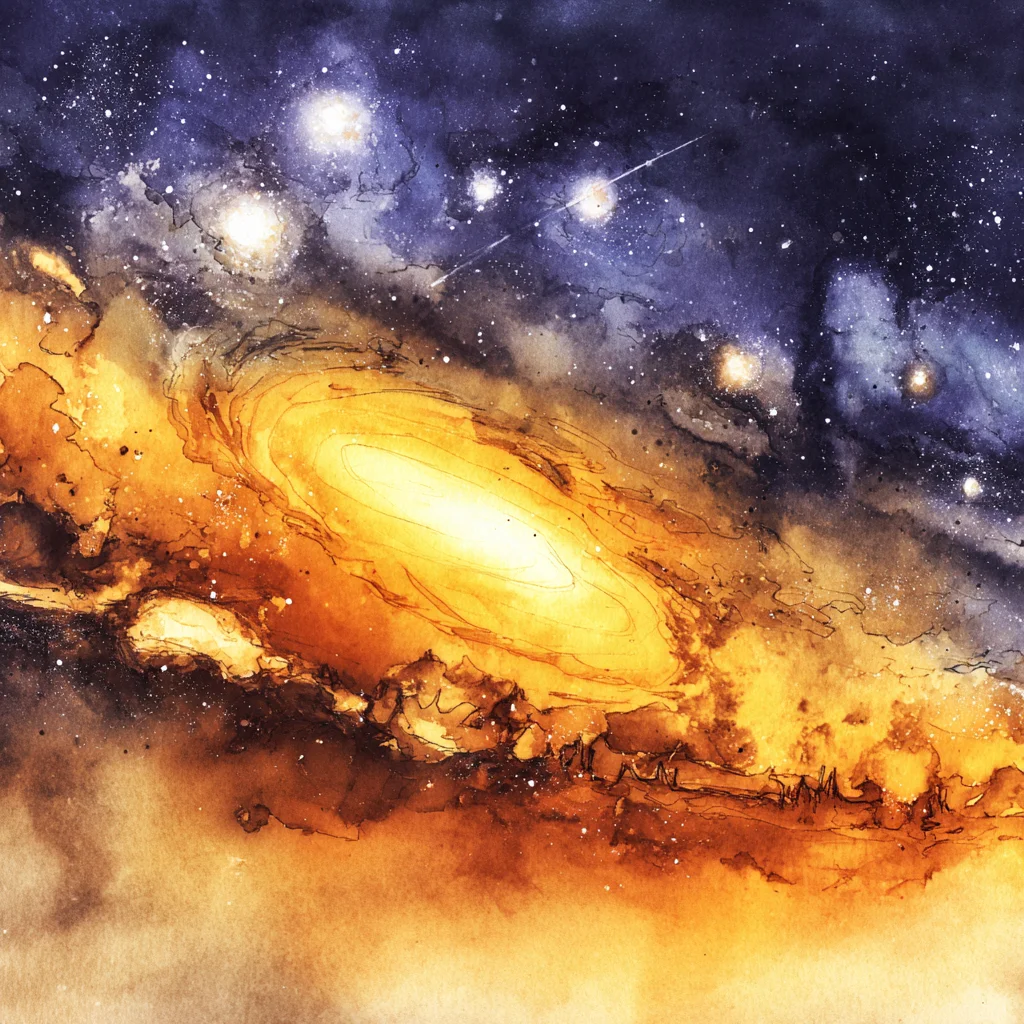
The story begins in darkness. "Before there was the sun, before there was the earth... there was only the cold and the dark." Children lean in, imagining the unimaginable—the void before creation, the silence before the first sound. And then, with dramatic timing, comes the moment of transformation.
The Structure of the Story
The narrative follows a specific trajectory, moving from the void to the formation of Earth. While scripts vary between schools and traditions, the essential beats remain consistent across AMI and other authentic Montessori implementations.
| Narrative Phase | Key Elements & Metaphors | Pedagogical Purpose |
|---|---|---|
| The Void | "Before there was the sun, before there was the earth... there was only the cold and the dark." | Establishes contrast. Engages imagination to visualize "nothingness". |
| The Creative Act | A command is given ("Let there be light") or a "Great Flaring Forth" occurs. Energy bursts into existence. | Introduces the concept of a First Cause or the Big Bang. Sense of magnitude. |
| The Chaos | Particles move frantically in immense heat. "It was a fiery mass." | Visualizing the chaotic energy of the early universe. Introduction to thermodynamics. |
| The Laws | "God gave laws." Particles obey instructions—"Love" and "Hate" for attraction/repulsion. | Key concept: The universe is governed by immutable laws, not caprice. |
| States of Matter | Solids: "Hold your shape." Liquids: "Flow, fill the hollows." Gases: "Move freely." | Anthropomorphic mnemonic for physical properties of matter. |
| Differentiation | The "Cosmic Dance." Heavy particles sink (iron core), lighter ones float (crust/atmosphere). | Explains density and Earth's stratification. |
| Cooling & Volcanism | The crust tries to form, but hot interior bursts through. The "war" between heat and cold. | Dramatizes the Hadean Eon and geological cooling. |
| The Rains | Atmosphere cools, rain falls, turns to steam, falls again. Eventually, oceans form. | The water cycle and preparation for life. |
| Conclusion | "I Joyfully Obey." The rocks and water today still follow these laws. | Instills order, security, and gratitude. Prepares for the Second Great Lesson. |
The Metaphor of "God With No Hands"
The title "God With No Hands" is derived from a specific passage in Montessori's writings. She distinguished the creative work of the cosmos from human work: humans create with their hands; the Creator creates through Law.
Making the Invisible Visible: The metaphor serves to explain invisible forces—gravity, electromagnetism, nuclear forces—in ways accessible to a six-year-old. When the story says, "The particles heard the command and obeyed," it is a narrative device for "Matter responds to physical laws."
This anthropomorphism is deliberate. Montessori recognized that elementary children are socially oriented and understand the world through relationships. By describing elements as having "likes and dislikes" (attraction and repulsion), abstract concepts of chemistry become comprehensible and memorable.
Variations: Religious vs. Secular Scripts
A significant divergence exists in contemporary applications of this lesson, splitting largely along the lines of Association Montessori Internationale (AMI) and American Montessori Society (AMS) or public sector implementations.
Traditional/AMI Approach
Retains the language of "God" and the "God With No Hands" script. Proponents argue this language is archetypal and metaphysical rather than strictly religious. The narrative is viewed as a "fable" conveying truth through mythic language.
Secular/Scientific Approach
Often renames the story "The Coming of the Universe." References to God are removed to adhere to secular standards. The "Great Flaring Forth," a term from cosmologist Brian Swimme, frequently describes the Big Bang.
Modern Adaptations
Many classrooms use Jennifer Morgan's "Born with a Bang" trilogy as visual and narrative aids. This integrates Montessori narrative style with updated astrophysics—element formation in stars, the role of supernovas.
The debate centers on whether removing "God" language strips the story of its "spiritual mystery" and reduces it to a dry science lecture, or whether it is a necessary update to maintain scientific integrity and respect religious diversity.
"The particles heard the command and obeyed... 'I joyfully obey.'"
— Traditional First Great Lesson Refrain
The Impressionistic Charts: Visualizing the Invisible
Integral to the delivery of the First Great Lesson is a set of large, hand-painted illustrations known as the Impressionistic Charts. These are not scientific diagrams in the conventional sense; they are artistic renderings designed to "strike the imagination" and visualize dynamic processes that cannot be photographed.
The Function of "Impressionism" in Science
Montessori called these charts "impressionistic" because they aim to convey an impression or a feeling of a scientific truth rather than precise data. For example, to show the vastness of the solar system, a chart might show the Sun as a curve taking up the entire page, with Earth as a microscopic dot. This conveys the feeling of scale more effectively than any to-scale diagram ever could.
Art Meets Science: The Impressionistic Charts bridge the gap between abstract scientific concepts and the child's emotional understanding. They are designed not to teach facts directly, but to create wonder—and from wonder springs the motivation to learn more.
The Core Charts Explained
The standard set for the First Great Lesson includes charts numbered 1 through 7. Each serves a specific purpose in the narrative:
How Small the Earth Is!
Visual: A massive fiery arc representing the Sun's edge dominates the page. A tiny speck represents Earth.
Concept: Scale—the insignificance of Earth's physical size versus its importance as the home of life.
This chart often produces gasps from children. The contrast between the enormous Sun and the barely visible Earth creates an immediate, visceral understanding of cosmic scale.
The Sun's Family (The Solar System)
Visual: The planets arranged in their orbits around the Sun.
Concept: The orderliness of the solar system; gravitational paths.
Children see that our neighborhood in space is structured and predictable—each planet following its own path, all governed by the same invisible forces.
The Cosmic Dance (The Cooling Process)
Visual: Traditionally depicts "Angels" carrying buckets of fire upward and buckets of ice downward.
Concept: Convection currents—hot matter rises, cold matter sinks.
The "Angels" are metaphors for the laws of thermodynamics. This chart becomes crucial for later studies in meteorology and plate tectonics.
The Time of the Volcanoes
Visual: A dark, cooling Earth illuminated by violent red volcanic eruptions.
Concept: The Hadean Eon—crust formation and atmospheric creation through outgassing.
The drama of this image captures the violence of early Earth—a planet still in formation, its surface constantly remade by forces from within.
The Sun's Beautiful Daughter (Formation of Oceans)
Visual: Clouds covering Earth, rain falling, turning to steam on the hot crust, rising again.
Concept: The water cycle—the "daughter" is the atmosphere/hydrosphere, born from Earth-Sun interaction.
This poetic title captures how water came to cover our planet, preparing it for the greatest transformation of all: life.
What's Inside the Earth? (Differentiation)
Visual: A cross-section showing core, mantle, and crust.
Concept: Density stratification—heavy elements sank to form the core, lighter silicates formed the crust.
Children discover that Earth is not a solid ball but a layered structure, still hot at its center—still changing.
The Continents Drift (Plate Tectonics)
Visual: Pangaea breaking apart.
Concept: The dynamic movement of the lithosphere.
Note: Original Montessori charts depicted the "wrinkled apple" theory (Earth shrinking as it cooled). Modern charts have been updated to reflect plate tectonics—showing continents as passengers on moving plates.
These charts are not meant to be displayed once and forgotten. They are returned to throughout the year, each viewing revealing new depths as children's understanding grows.
The Liturgy of Experimentation
The First Great Lesson is not a passive listening experience. It is punctuated by a series of scientific demonstrations that serve as "concrete anchors" for the abstract concepts in the story. These experiments are performed with a sense of ceremony—almost liturgically—to underscore the wonder of natural laws.
When the Guide darkens the room and lights a single candle, saying "And then... there was light," children experience the story not just intellectually but viscerally. They feel the transformation from darkness to light. This is embodied learning at its finest.
Core Experiments and Their Narrative Integration
The Void and the Light
Procedure:
The room is darkened completely. After describing the cold and darkness, a candle is lit—or a black balloon filled with glitter is popped, scattering "stars."
Narrative Hook:
"And then... there was light." / "The Great Flaring Forth."
Forces of Attraction (Gravity/Accretion)
Procedure:
Small bits of paper or confetti are placed in a bowl of water. They slowly clump together, drawn by surface tension.
Narrative Hook:
"Just as these papers rush together, the particles of the universe felt a great love for one another and joined to form the stars."
States of Matter (The Laws)
Procedure:
A rock (solid), colored water (liquid), and incense or perfume (gas) are presented.
Narrative Hook:
"To the solids, He said: 'You shall hold your shape.' To the liquids: 'You shall flow and push sideways, but never up.' To the gases: 'You shall move freely.'"
The Formation of Layers (Density)
Procedure:
Honey, water, and oil are poured into a clear jar. They settle into distinct layers.
Narrative Hook:
"The heaviest particles sank to the center, the lighter ones floated on top. This is how our Earth has a core, a mantle, and a crust."
The Volcano
Procedure:
A clay model with baking soda and vinegar—or for older students outdoors, ammonium dichromate for a more dramatic effect.
Narrative Hook:
"The Earth tried to cool, but the hot fire inside was trapped. It burst through the skin of the Earth!"
Not One-Time Events: These experiments are not performed once and forgotten. They are placed on the shelf—part of the "prepared environment"—for children to repeat independently. This repetition allows the child to internalize the "laws" and verify the truth of the story through their own hands.
The Power of Repetition
In traditional education, a demonstration happens once, followed by memorization. In Montessori education, the demonstration is an invitation to explore. Children who watch the density experiment may return to it dozens of times, trying different liquids, measuring precisely, recording results.
"The hand is the instrument of the mind."
— Maria Montessori
Each time a child pours honey, water, and oil into a jar and watches them separate, they are not merely observing density—they are experiencing a law of the universe. This embodied knowledge becomes permanent in ways that reading about density never could.
Curriculum Integration: "The Spray"
The pedagogical genius of the First Great Lesson lies in its function as a "unifying center." It is not a standalone unit; it is the seed from which the entire elementary curriculum germinates. This phenomenon is often called "The Spray"—visualizing how interest sprays outward from the story into various disciplines.
Imagine a fountain. Water rises from a single point and then sprays outward in every direction. The First Great Lesson is that point of origin. Every subject a child will study in the elementary years connects back to this foundational narrative.
Mapping the Curriculum Branches
| Discipline | Connection to the Story | Follow-Up Lessons |
|---|---|---|
| Geography | The direct subject of the story—the formation of Earth, its layers, its features. |
|
| Chemistry | The "Laws" given to particles—attraction, repulsion, states of matter. |
|
| Physics | The forces described—light, heat, gravity, motion. |
|
| Mathematics | The immense time scales and distances that boggle the mind. |
|
| History | The age of Earth versus the age of humanity—deep time. |
|
| Language | Vocabulary from the story; myths from many cultures. |
|
The Interdisciplinary Web
By rooting all subjects in a single narrative, Montessori eliminates the fragmentation of knowledge that plagues conventional education. When a child studies the Periodic Table, they are not just memorizing symbols—they are studying the characters introduced in the First Great Lesson: the particles that obeyed the laws.
Everything Connects: When children study geography, they are studying the result of the "Cosmic Dance." When they learn about volcanoes, they remember the "war between heat and cold." This creates a cohesive intellectual framework where every piece of knowledge relates to the whole.
"The stars, earth, life of all kinds form a whole in relation with each other, and so close is this relationship that we cannot understand a stone without some understanding of the great sun!"
— Maria Montessori
This integration is not artificial. Montessori recognized that the universe itself is integrated—that everything truly is connected. The curriculum simply reflects this reality. A child who has heard the First Great Lesson never learns a fact in isolation again. Each new piece of knowledge finds its place on the "mental coat rack" established on that first, wonder-filled day of school.
The Cosmic Task and Teleology
A defining feature of Montessori's philosophy, deeply embedded in the First Great Lesson, is the concept of Teleology—the idea that the universe and its inhabitants have a purpose or goal. This is not merely a philosophical abstraction; it is the moral and spiritual backbone of the entire curriculum.
Understanding the Cosmic Task
Montessori coined the term "Cosmic Task" to describe the function that each agent in the universe performs. Crucially, this task is often performed unconsciously while satisfying the agent's own needs. The sun does not intend to give light and warmth to Earth—it simply burns. Yet that burning is its cosmic task.
Inorganic Examples
The "task" of the sun is to burn and provide energy. The "task" of the ocean is to regulate temperature and provide a home for life. The "task" of the rock is to obey the law of gravity, forming landscapes that shape ecosystems.
Biological Examples
The coral polyp's "task" is to feed itself, but in doing so, it filters the ocean and builds islands. Bees seek nectar for themselves, but in doing so, they pollinate the world's flowers.
Consider how early shellfish filtered calcium from water, creating limestone that would become the building blocks of future civilizations. The first land plants produced oxygen, enabling animal life to flourish. Even fossil fuels represent the cosmic task of decayed organisms serving future generations. Nothing exists in isolation; everything serves.
"What is My Task?"
The First Great Lesson sets the stage for the child's moral development. By seeing that even inanimate elements have a "job" to do in maintaining the harmony of the universe, the child is naturally led to ask the most profound question: "If the hydrogen atom has a task, and the coral has a task, what is my task as a human being?"
"All creatures work consciously for themselves, but the real purpose of their existence remains unconscious, yet claiming obedience."
— Maria Montessori
This is the root of Montessori Peace Education. It is not a lecture on morality—it is a scientific demonstration of interdependence. The child learns that they are part of a vast, collaborative effort spanning billions of years. This instills both gratitude (for the work done by elements and ancestors) and responsibility (to contribute their own work to the future).
From Wonder to Responsibility: The progression is natural: Wonder leads to understanding, understanding leads to appreciation, and appreciation leads to a sense of responsibility. Children who understand their place in the cosmic story naturally want to contribute positively to it.
Connecting Past, Present, and Future
The concept of cosmic task creates a bridge across time. Children come to understand that they are recipients of gifts from the past—the oxygen in the air, the metals in their devices, the knowledge in their books. But they are also contributors to the future. What they create, learn, and share becomes part of the cosmic inheritance for generations to come.
This perspective transforms education from mere information transfer into something far more profound: the preparation of individuals who understand their role in the ongoing story of the universe. As Montessori envisioned, education becomes not just about learning facts, but about finding one's unique contribution to the unfolding cosmic drama.
Critical Analysis: Challenges and Controversies
While the First Great Lesson is a beloved tradition in Montessori education, it is not without challenges in the modern educational landscape. Understanding these challenges—and how they can be addressed—helps educators deliver the lesson effectively while maintaining both integrity and wonder.
Scientific Accuracy vs. Narrative Integrity
Montessori wrote the original lesson in the 1940s. Since then, our understanding of geology and astrophysics has evolved significantly. This creates a tension between preserving the original narrative and maintaining scientific accuracy.
The "Wrinkled Apple" Theory
Montessori originally subscribed to the contraction theory of mountain formation—the idea that Earth was shrinking as it cooled, causing the surface to wrinkle like an aging apple. We now know mountains are formed primarily by plate tectonics.
Resolution:
The "Cosmic Dance" is now explained as convection currents driving plate tectonics. The visual metaphor of hot rising and cold sinking remains accurate; only the specific application has been updated.
The Big Bang
The original story is vague about the initial event ("God gave orders"). Modern cosmology offers the Big Bang theory with considerably more detail about the early universe.
Resolution:
The "Great Flaring Forth" language integrates seamlessly with Big Bang cosmology. Teachers are encouraged to present the story with the note: "This is the story as we know it today; scientists are always discovering new things."
Living Knowledge: The goal is to present truth as currently known without losing the sense of awe. Science is itself a story—one that continues to unfold. Children understand this when framed appropriately.
The "God" Question in Secular Spaces
The use of "God" in the story's traditional title and narrative is perhaps the most contested aspect. Different communities approach this differently:
Critique: Some educators argue that removing "God" destroys the archetypal nature of the story, stripping away the "Mystery" that fuels imagination.
Counter-Critique: Others argue that referencing a deity imposes a specific religious view in classrooms serving diverse communities.
Best Practice: Most secular schools focus on the "Mystery of the Laws." They emphasize that we don't know why gravity exists, only that it does. This preserves the sense of wonder without theological dogma. The story can be told with wonder intact, regardless of whether "God" is mentioned explicitly.
Common Teacher Mistakes
The delivery of the Great Lesson is an art, and there are common pitfalls that can undermine its effectiveness:
-
Over-Explaining
The lesson is meant to be an impression, a seed. Teachers sometimes turn it into a two-hour lecture filled with definitions. It should be short (20-30 minutes), dramatic, and leave children with questions—not answers.
-
Praise and Punishment
In follow-up work, some teachers revert to traditional praise ("Good job!"). Montessori emphasized that the reward is in the work itself. External validation can dampen the intrinsic motivation ignited by the story.
-
The "Expert" Trap
Teachers sometimes feel they must know the answer to every question about black holes or volcanoes. The Montessori guide's role is to say, "I don't know—let's find out," encouraging the child to research independently.
The First Great Lesson works best when the teacher trusts the story itself. The drama is in the narrative, not in elaborate explanations. The wonder is in the mystery, not in having all the answers.
Conclusion: Finding Our Place in the Cosmic Dance
"The Story of the Universe" is far more than a curriculum unit; it is the heartbeat of the Montessori elementary classroom. By presenting the cosmos as a unified, lawful, and purposeful entity, it provides the developing child with a sense of orientation that is often lacking in fragmented modern education.
This single lesson satisfies the psychological characteristics of the second plane of development—the reasoning mind and the imagination—while laying the groundwork for advanced study in sciences and humanities. It answers the child's deepest questions: Where do I come from? Where do I belong? What is my purpose?
The Elements of Transformation
Dramatic Oral Narrative
The theatrical delivery captures imagination and creates lasting emotional impressions.
Visual Stimulus
Impressionistic charts make invisible forces visible and abstract concepts tangible.
Sensory Engagement
Hands-on experiments transform abstract laws into embodied knowledge.
Cosmic Task
Understanding purpose transforms learning from fact acquisition into a quest for meaning.
Beyond Facts to Meaning: Through the concept of the Cosmic Task, education is elevated from the mere acquisition of facts to a quest for meaning. The child is empowered to find their own unique contribution to the unfolding story of the universe.
The Lasting Impact
Children who experience the First Great Lesson never see the world the same way again. When they look at a rock, they see billions of years of history. When they study chemistry, they remember the particles that "joyfully obeyed." When they learn about other cultures, they understand that all of humanity shares this cosmic heritage.
"If the idea of the universe is presented to the child in the right way, it will do more for him than just arouse his interest, for it will create in him admiration and wonder, a feeling loftier than any interest and more satisfying."
— Maria Montessori, To Educate the Human Potential
As Maria Montessori envisioned, when the child sees the grandeur of the cosmic plan, they are not just learning—they are finding their place in the Cosmic Dance. They join a story that began with the first flash of light and continues through their lives and beyond.
And like the particles at the beginning of time, they too can whisper along with the elements:
"I joyfully obey."