The Biological Pivot of Cosmic Education
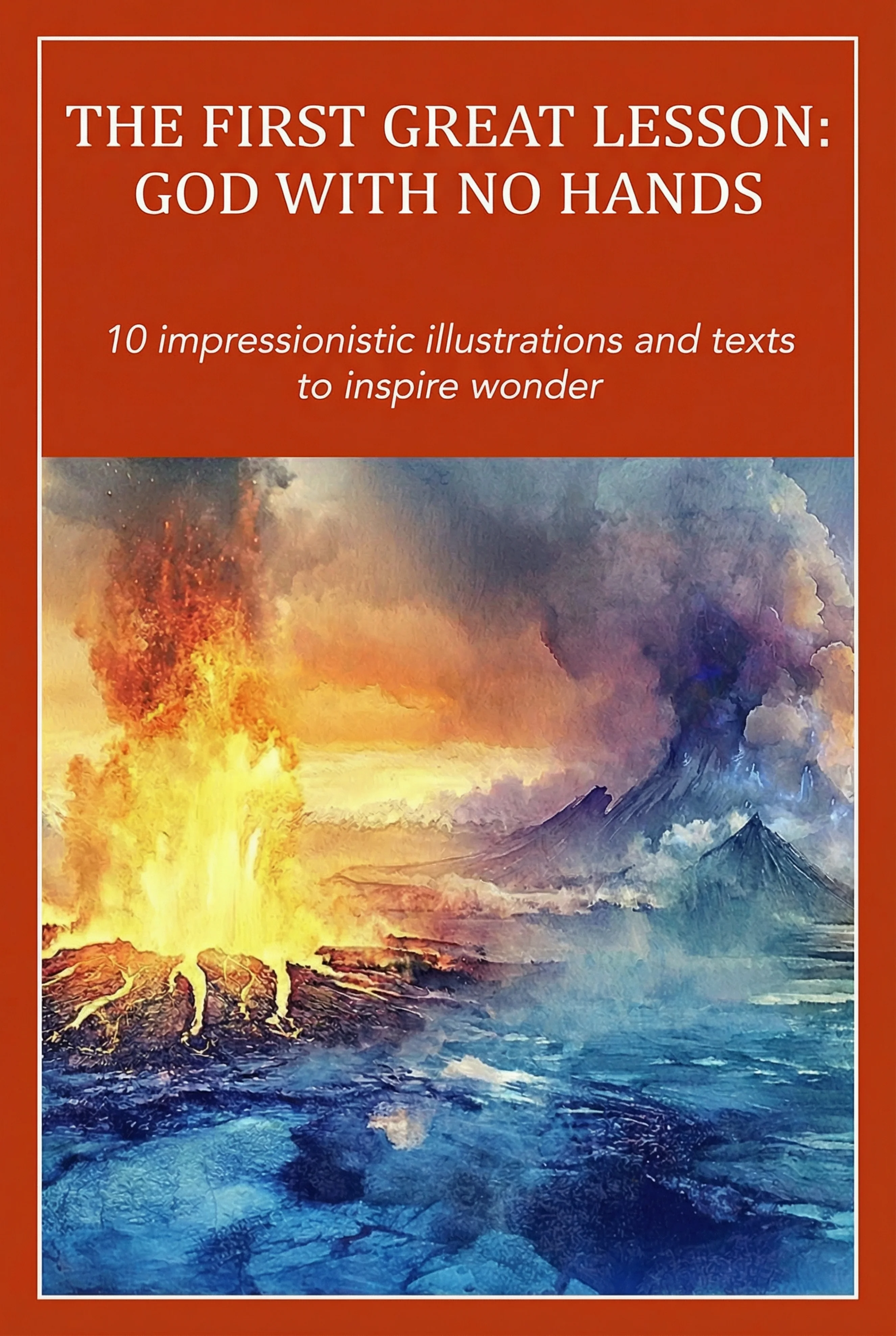
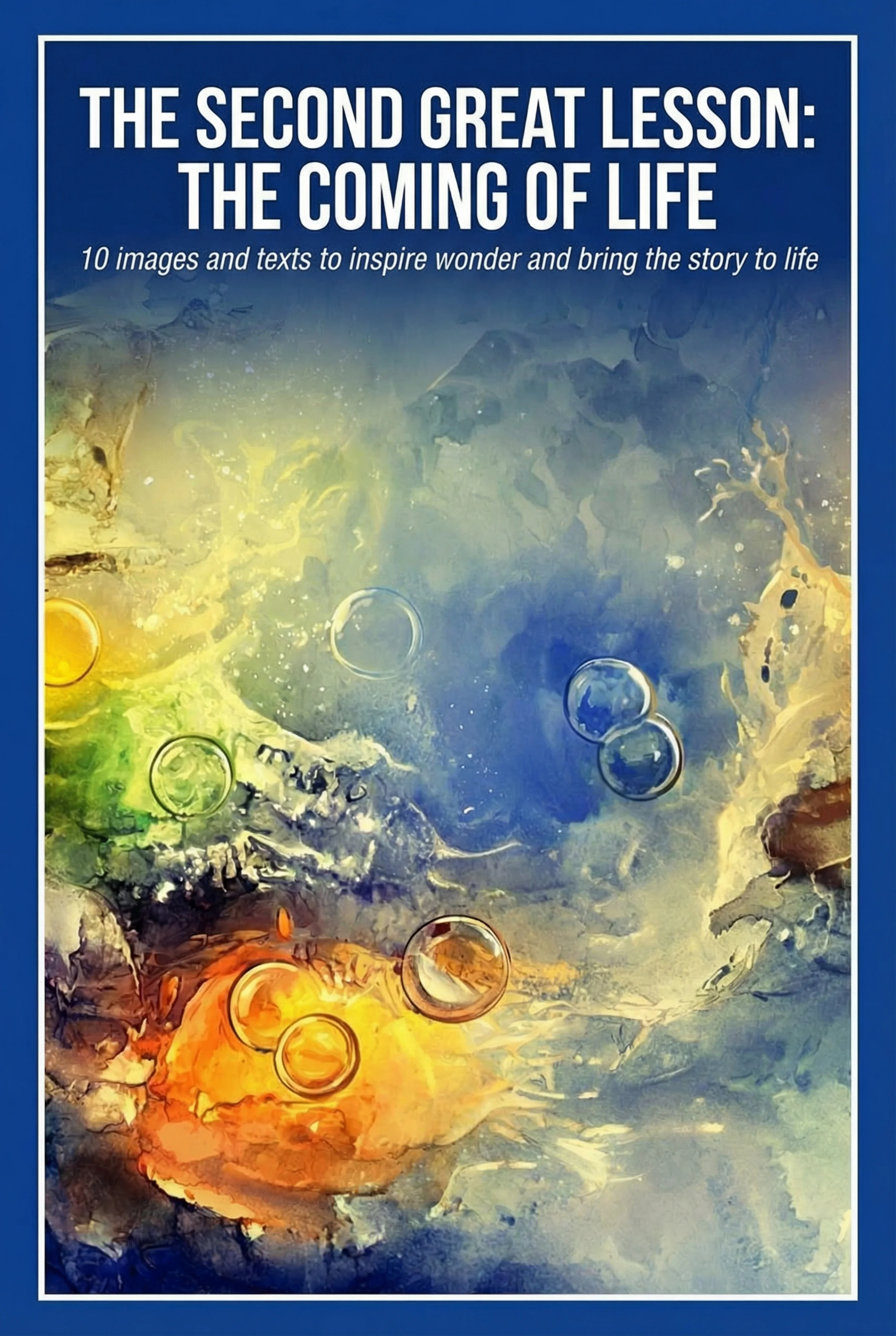
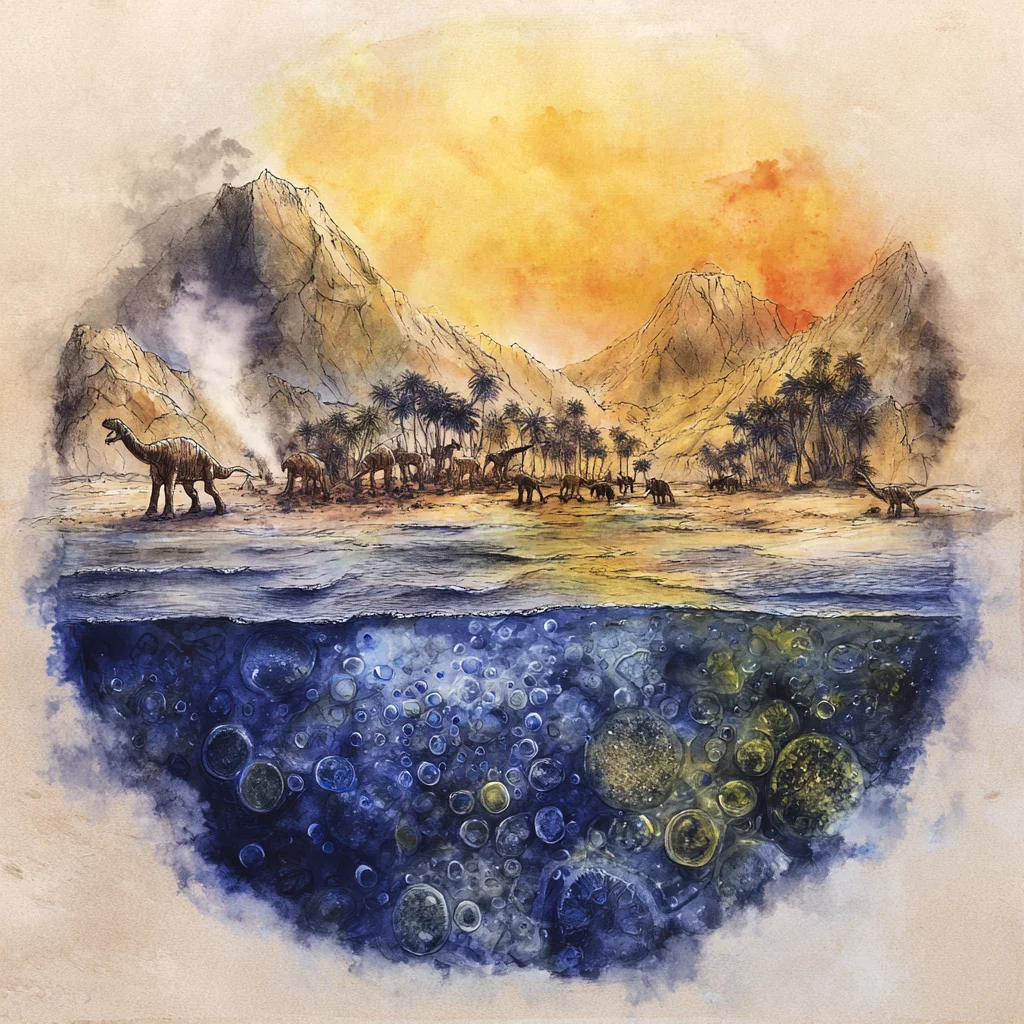
Picture a world of fire and rock, of crashing waves on barren shores, where the only sounds are the howl of wind and the rumble of volcanoes. For billions of years, this was Earth—a planet of magnificent violence but utterly, profoundly silent. No heartbeat. No breath. No life. Then, in circumstances still shrouded in mystery, something extraordinary happened: a tiny drop of living matter appeared in the ancient seas, and everything changed forever.
This is the threshold moment at the heart of the Second Great Lesson in Montessori's Cosmic Education—the story titled "The Coming of Life." While the First Great Lesson ("The Coming of the Universe") establishes the physical stage—the formation of galaxies, the birth of our solar system, the cooling of molten Earth, and the fundamental laws of physics and chemistry—the Second Great Lesson introduces the actors. It serves as the bridge between the abiotic (non-living) and the biotic (living) worlds, narrating the emergence of organic life from the "primordial soup" and tracing its magnificent journey through deep time to the advent of humanity.
The Story's Purpose: The Second Great Lesson is not merely a biology lesson. It is a philosophical treatise on interdependence, designed to answer the psychological needs of the elementary child who is driven by the question "Why?" and a developing moral sense. It reveals that every organism, from the smallest bacterium to the mightiest whale, plays a role in the cosmic drama.
Understanding the Second Plane Child
To understand why this story matters so deeply, we must first understand its audience. The child of the second plane of development (ages 6–12) differs radically from the child of the first plane (ages 0–6). While the younger child is a "sensorial explorer" focused on what the world is, the elementary child becomes a "reasoning explorer" focused on how and why the world functions.
Montessori identified specific characteristics of this age group that the Second Great Lesson addresses with remarkable precision:
The Imagination
The ability to visualize what cannot be directly seen. The story asks the child to imagine a world without life—a concept wholly alien to their everyday experience, yet one that sparks endless wonder.
The Heroic Instinct
Elementary children are drawn to stories of struggle and triumph. The Second Story frames life itself as the hero, overcoming the toxicity of the early Earth, the harshness of dry land, and the devastation of mass extinctions.
The Moral Sense
The child is beginning to understand right and wrong, justice and responsibility. The story introduces the concept of the "Cosmic Task"—the idea that every living thing contributes to the welfare of the whole.
"The child's mind is not just a vessel to be filled, but a fire to be kindled. When we present the universe as a drama of interconnection, we ignite a flame that illuminates all subsequent learning."
— Adapted from Maria Montessori's educational philosophy
The Scope of This Exploration
This comprehensive analysis examines every dimension of the Second Great Story. We explore the traditional AMI (Association Montessori Internationale) presentation alongside adaptations by the AMS (American Montessori Society) and religious variations. We investigate the material artifacts central to the lesson—particularly the magnificent Timeline of Life—and rigorously examine the challenges of reconciling the original 1940s narrative with modern 21st-century biological science, including phylogenetics and plate tectonics.
Whether you are a Montessori teacher trainer seeking a definitive reference, an educator preparing your first presentation, or a curious parent wanting to understand what your child experiences, this exploration offers both the depth of scholarly analysis and the wonder that befits a story about the greatest adventure our planet has ever known: the emergence and evolution of life itself.
The Narrative: From Void to First Life
The narrative of "The Coming of Life" is a masterpiece of oral tradition. It is not a textbook reading but a performance. The guide uses voice modulation, silence, and dramatic pacing to convey the magnitude of the subject. The story unfolds as a chronological journey from the Hadean Eon, when Earth was still a molten inferno, through to the Cenozoic Era and the rise of mammals.
The Era of the Void
The narrative opens in the aftermath of the First Great Lesson. The Earth has cooled; the rains have fallen for centuries, forming the great oceans. The lithosphere, atmosphere, and hydrosphere are in place. Yet, the narrator emphasizes a profound lack: the biosphere is missing.
This section is often termed "The Void" or the "Era of Silence." The guide paints a picture of a desolate world with evocative imagery designed to make children truly feel the absence of life:
"Imagine a world with no sound but the wind and the crashing waves."
"There were no trees to rustle, no birds to sing, no insects to buzz."
"The rocks were bare. The sun beat down on a grey and rocky earth."
This imagery serves a profound pedagogical purpose: it establishes the abiotic environment as a harsh, unyielding place. It creates a need for life in the mind of the child. The dramatic tension builds around the question that should be forming in every young listener's mind: How could anything survive here?
The Miracle of the First Cell
Into this hostile environment, the narrative introduces the protagonist. The language used is deliberately vague to enhance the mystery—we speak of origins wrapped in cosmic wonder, not sterile scientific precision. Life is described as "a tiny blob of jelly," "a little drop," or "the first speck of living matter."
The guide highlights the three superpowers of this tiny entity, contrasting them with the mighty but inanimate volcanoes and oceans:
It Could Eat
It could take matter from the outside and make it part of itself—transforming the non-living into the living.
It Could Grow
It did not just accumulate like a crystal; it expanded from within, building itself ever larger and more complex.
It Could Reproduce
It could make more of itself—ensuring that life, once begun, would never end as long as conditions allowed.
This moment—the threshold between the non-living and the living—is the emotional hook of the lesson. The narrative suggests that while the rocks were strong and the volcanoes were mighty, they could not change themselves. They could not grow, could not heal, could not create copies of themselves. The "little drop of jelly" was fragile, yet it possessed the power of infinite renewal.
The Contrast That Teaches: By placing the fragile first cell against the backdrop of geological violence—volcanoes, asteroid impacts, toxic atmospheres—children grasp something profound: life is both incredibly delicate and astonishingly persistent. This paradox lies at the heart of the story's power.
The Great Oxygenation and the Cosmic Task
A critical dramatic beat in the traditional story involves the work of the early "sun-eaters"—the cyanobacteria. This section is the primary vehicle for introducing the concept of the Cosmic Task, perhaps the most important philosophical concept in all of Cosmic Education.
"These tiny creatures had a job to do. They loved the sun. They took in the sunlight and the salts from the water to build their bodies."
"But as they lived, they gave off a gas—oxygen. At first, the Earth didn't want it. The iron in the rocks rusted; the ocean turned red with rust."
"But these little workers kept working, day after day, for millions of years, until the sky turned blue and the air became sweet."
This segment teaches something revolutionary: the environment we take for granted—breathable air, a blue sky—was constructed by the labor of microscopic ancestors. The atmosphere is not just a physical fact but a biological artifact, created over billions of years by countless organisms doing their cosmic work.
The lesson cultivates gratitude—a key emotional aim. The children learn that we owe our every breath to organisms that lived and died long before any human existed. The guide explicitly prompts this reflection: "We must say thank you to the microscopic life that cleaned the air for us." This counters the natural egocentrism of childhood, placing the child in a lineage of debt to the past.
The Ages of Diversity and Giants
The Explosion of Diversity (Paleozoic Era)
The narrative moves into the Paleozoic Era, often characterized as the time when "life tried everything." As the story progresses, the Timeline of Life is unrolled to reveal the Cambrian explosion—that remarkable period when the oceans suddenly teemed with an astonishing variety of creatures, each exploring different ways to eat, defend, and reproduce.
The Trilobites
The "scavengers" or "cleaners" of the early ocean. Their Cosmic Task was to keep the waters pure by eating death and decay.
The Arms Race
Some animals built shells. Others developed swift legs to run. Others grew giant eyes to see—nature's first arms race of attack and defense.
The Cephalopods
The straight-shelled nautiloids became the first "rulers" of the sea—predators that dominated the ancient oceans.
The story dramatically describes the development of defense and offense without yet explicitly teaching Darwinian theory. Children understand through narrative what they will later formalize through science: that adaptation is the key to survival, and that every innovation by one creature drives innovation in others.
The Conquest of Land (Silurian/Devonian)
One of the most dramatic moments in the Second Great Lesson is the transition from water to land. The guide describes the land as "forbidden territory"—dry, hot, and bathed in ultraviolet radiation. For billions of years, no living thing had dared to leave the protective embrace of the water.
The narrative personifies plants as the brave explorers who first crept onto the rock, turning it into soil and creating shade. "They prepared the home for the animals." The children learn that before any animal could survive on land, the plants had to do their cosmic work first—breaking down rock, creating soil, building the atmosphere with fresh oxygen.
The arrival of the first tetrapods is told as a tale of innovation. The guide emphasizes the difficulty of this transition: the need to develop a "space suit" (skin) to keep the water inside, and the development of the egg to protect the young from the harsh, dry world. This highlights the theme of interdependence: animals could not go to land until plants had prepared the way.
The Lesson of Interdependence: By showing that animals could only colonize land after plants had prepared it—creating soil, shade, and oxygen—children grasp a fundamental ecological truth: no species succeeds alone. Every triumph builds on the work of those who came before.
The Age of Giants (Mesozoic Era)
The Mesozoic is the era children often anticipate most eagerly. As the timeline unrolls to reveal the familiar shapes of dinosaurs, the narrative shifts to a tone of grandeur and wonder. These are the creatures that captured the imaginations of countless children—and the Second Great Lesson uses this natural fascination as a gateway to deeper understanding.
"The earth shook under their feet. Giants walked the land—creatures so huge that their footsteps made the ground tremble."
"Some had necks so long they could eat from the tallest trees. Others wore armor like tanks. And some had teeth as long as your arm."
Traditional Montessori narratives refer to dinosaurs as "Terrible Lizards" (following the etymology of the word "dinosaur"). The story describes their dominance and the immense variety among them: the long necks of the sauropods reaching the high ferns, the armor of the ankylosaurs, the fearsome teeth of the tyrannosaurs.
Crucially, the story also highlights the emergence of the first birds. Archaeopteryx is presented as life conquering the final element: the air. Having mastered water and land, life now took to the skies. This progression—water to land to air—gives children a sense of life's relentless creativity and expansion.
The Great Extinction and the Rise of Mammals
The narrative addresses the extinction event at the K-Pg boundary (the end of the Cretaceous) with solemnity. This is a moment of profound drama, and the guide's voice often drops to near-whisper:
"And then... something happened. Some say a great rock fell from the sky. Others say the volcanoes poured fire across the land. The skies grew dark. The plants died. And the giants—those magnificent, powerful giants—could not adapt. They perished."
But the story does not end in tragedy. It zooms in on the tiny, furry creatures—the mammals—who had been hiding in the shadows for millions of years, living beneath the notice of the dinosaur rulers.
A crucial shift in the narrative occurs here. The guide highlights a new quality in life: Love. "These new animals did not lay their eggs and leave them. They kept their eggs inside them. When the babies were born, the mothers nursed them. They protected them." This emotional evolution is paralleled with physical evolution, resonating deeply with the elementary child's need for security and affection. The age of giants has ended, but the age of care has begun.
This section teaches children that extinction is not simply failure—it is also opportunity. The end of the dinosaurs cleared the way for mammals to flourish, eventually leading to the emergence of humans. The story normalizes change and impermanence while offering hope: life always finds a way.
The Art of Presentation and Materials
The delivery of the Second Great Lesson is a ritualized event. It is structured to appeal to the senses and the emotions, creating an "impression" that will fuel weeks or months of academic work. The success of the lesson depends not just on the content, but on how it is presented.
The Oral Tradition: Voice and Atmosphere
The teacher (or guide, in Montessori terminology) prepares the environment carefully. The room may be darkened; a single candle might be used to focus attention. The guide uses a "storytelling voice"—lower, slower, and more rhythmic than the instructional voice used for practical lessons.
-
Eye Contact: The story is memorized (or effectively improvised from a known structure) so the guide can maintain eye contact, gauging the children's reactions and adjusting the drama accordingly. Reading from a script breaks the spell.
-
Silence: Pauses are used effectively, especially after the description of the Void and after the extinction events, to let the weight of the concepts settle. The silence itself teaches.
-
Voice Modulation: The guide's voice rises with the drama of the Cambrian explosion, drops to a whisper at the extinction, and lifts again with hope as mammals emerge. The voice is an instrument of wonder.
The Timeline of Life: The Central Visual Aid
The Timeline of Life is the pedagogical anchor of this lesson. It is a long, horizontal chart, typically printed on canvas or synthetic paper, varying in length from 3 to 5 meters depending on the manufacturer and classroom size. This is not a decoration—it is a teaching instrument of extraordinary power.
The Unrolling Process
The timeline is not displayed statically on a wall before the lesson. It is presented rolled up. As the story progresses, the guide (or a student helper) slowly unrolls it, revealing one era at a time.
Pedagogical Function: This physical action mimics the passage of time. It builds suspense—"What comes next?"—and prevents the child from being overwhelmed by the entire history at once. It creates a linear narrative structure in physical space. The unrolling is the lesson.
Symbolism on the Timeline
The Red Line
A distinctive feature of traditional Montessori timelines is the red line connecting organisms. This represents the continuity of life (the germ plasm). It branches to show divergence and thickens to show abundance. Life has never been broken since the first cell.
The Ice Symbols
Traditional charts use stylized white icicles or snow-capped mountains to demarcate the ends of eras, representing the older theory that ice ages were the primary cause of mass extinctions.
Continental Drift
Small inset globes often show the movement of continents through time, linking the biological story to the geological one. Children see how the map of Earth has constantly changed.
Impressionistic Charts
Complementing the timeline are Impressionistic Charts. These are large, poster-sized illustrations designed to convey a single concept with artistic flair rather than diagrammatic precision. They speak to the imagination first, the intellect second.
Chart of the Void
A chart that is largely blank or white/grey, representing the abiotic Earth. It visually reinforces the concept of "nothingness" before life—an image children never forget.
The Clock of Eras
A circular chart representing geologic time as a 12-hour clock. This gives a proportional view of time—showing just how brief the age of humans is compared to the vast Precambrian.
The Color System
The colors on the Clock of Eras are standardized across Montessori materials:
Artifacts and Demonstrations
The abstract images on the timeline are bridged to reality through concrete objects that children can touch and examine:
The Long Black Strip
A 30-meter black ribbon representing the age of the Earth, with a tiny white tip for humanity. This is often unrolled in a hallway or outdoors to give a kinesthetic sense of deep time.
Fossil Handling
Real fossils (trilobites, crinoid stems, shark teeth) are placed directly onto the timeline at the corresponding period during the story. This tactile experience proves to the child that the "monsters" in the pictures were real.
Chemical Demonstrations
Some teachers demonstrate the "primordial soup" or the release of oxygen by plants (using Elodea in water) to make the invisible work of the ancestors visible.
Timing and Rhythm: The Second Great Lesson is usually presented in the first few weeks of the school year, typically one week after the First Great Lesson. This creates a rhythm of "macro to micro." The story is not a "one-off"; it is revisited annually. First-year students (6-year-olds) hear it with wonder; third-year students (9-year-olds) hear it with a critical ear, ready to research specific eras in depth.
Variations Across Traditions
While the core narrative of the Second Great Story remains consistent across Montessori implementations, the delivery and emphasis vary significantly between different traditions. Understanding these variations helps educators choose materials and approaches that align with their school's philosophy and student population.
AMI vs. AMS Approaches
AMI (Traditional)
- Adheres strictly to the charts and scripts approved by the AMI materials committee
- Uses almost exclusively the Nienhuis timeline design
- Emphasizes the philosophical unity and the "Cosmic Plan"
- Scientific inaccuracies in older charts are handled as "talking points" rather than replacing materials
- The delivery is highly ritualized, often using the specific "Cosmic Fables" written by Mario Montessori
AMS (Modernized)
- Teachers are encouraged to update the curriculum based on current science
- Schools may use timelines from various publishers (ETC Montessori, Alison's Montessori)
- Features updated phylogenetics (clades) and modern artwork
- The script may be edited to remove teleological language in favor of scientific causality
- Greater flexibility in presentation while maintaining narrative core
Timeline Design Variations
The visual differences between timelines reflect deeper pedagogical divergences. Understanding what different timelines emphasize helps educators select materials that align with their teaching philosophy:
| Feature | Nienhuis (AMI/Traditional) | ETC / Big Picture Science (Modern) |
|---|---|---|
| Lineage Lines | Red lines often converge (fuse) | Red lines diverge (branch) to show common ancestry |
| Classification | Traditional 5 Kingdoms | 3 Domains (Bacteria, Archaea, Eukarya) or 6 Kingdoms |
| Extinctions | Generic ice/snow symbols | Specific symbols (volcanoes, asteroids) for the 5 major events |
| Art Style | Impressionistic, stylized drawings | Realistic, often photographic or highly detailed illustrations |
| Length | Very long (requires large floor space) | Often available in modular or shorter formats |
Handling of Creationism vs. Evolution
This is a critical variation in global Montessori applications. How the story is framed depends significantly on the philosophical and religious context of the school:
Secular Environments
The story is strictly evolutionary. The "intelligence" in the universe is defined as the Laws of Physics and Natural Selection. The focus is on scientific inquiry, and the narrative emphasizes how we can know what we know about the ancient past through fossils, geology, and chemistry. The Cosmic Task is framed as an ecological concept—each species fills a niche and contributes to the balance of ecosystems.
Religious Environments (Catechesis of the Good Shepherd)
The story is paralleled by the "History of the Kingdom of God" timeline. The colors (Blue, Green) take on theological meaning—Blue representing Unity/Creation, Green representing Redemption. Evolution is accepted but framed as God's method of creating. The "Cosmic Task" is interpreted as obedience to the Divine Will. The narrative emphasizes that God prepared the Earth for humanity, reinforcing a Christocentric worldview while maintaining scientific accuracy about the sequence and nature of life's development.
Montessori's Own Position: Maria Montessori herself was Catholic and saw no conflict between evolution and faith. She viewed the unfolding of life on Earth as evidence of divine intelligence working through natural processes. This "both/and" approach rather than "either/or" continues to characterize many religious Montessori programs.
Regardless of the philosophical framework, the narrative structure remains consistent: a journey from simplicity to complexity, from single cells to diverse ecosystems, from water to land to air. The Cosmic Task—the idea that each creature contributes to the whole—is central whether understood as ecological interdependence or divine purpose.